Introduction
Do you have a bathroom that feels too cramped or cluttered? You’re not alone. Millions of homeowners face the same challenge every day. The good news is that a tiny bathroom doesn’t have to feel uncomfortable or look boring. With the right design choices, smart storage solutions, and modern fixtures, you can turn even the smallest space into a beautiful and functional room.
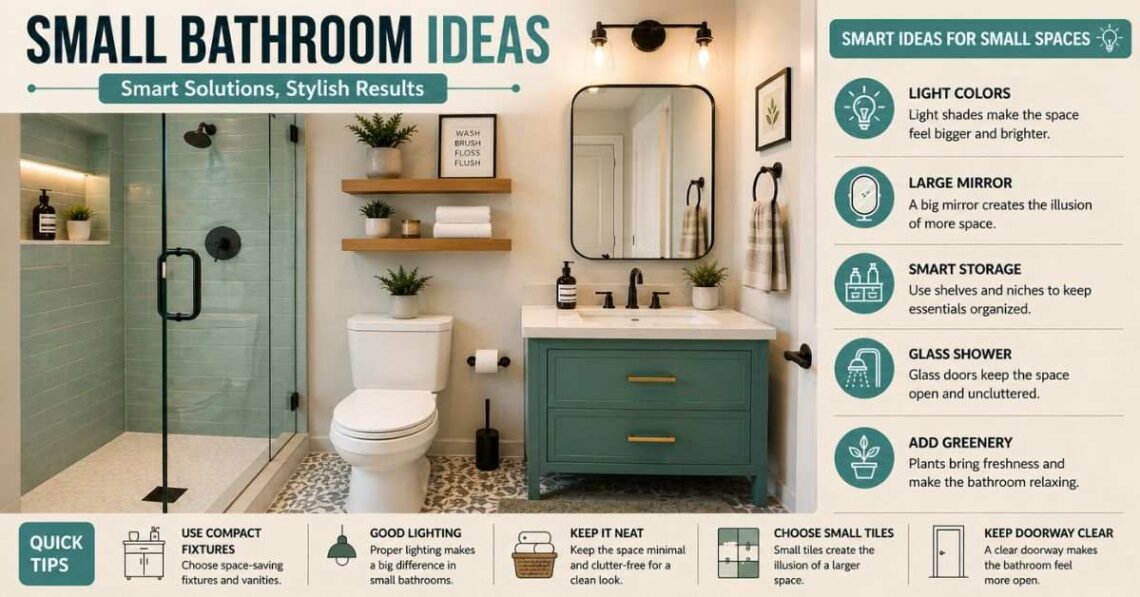
This complete guide brings together the best small bathroom ideas to help you create a space that looks bigger, works better, and feels more relaxing. Whether you’re planning a full renovation or just want to make simple updates, these tips will show you exactly what to do. In 2026, small bathroom design shifts toward layouts that stay open, surfaces that continue across zones, and storage that fits into the structure instead of sitting on top of it. From choosing the right fixtures to using clever visual tricks, every suggestion in this article is based on real expert advice and the latest trends.
By the end of this guide, you’ll understand how to make smarter choices for your compact bathroom. Let’s dive in and explore how to transform your space into something special.
Understanding Why Space Feels Limited in Your Bathroom
Before you start making changes, it’s important to understand why your bathroom feels small in the first place. Small bathrooms tend to feel tight not because of size alone, but because of how quickly surfaces, fixtures, and storage start to compete for space. When too many items fight for attention, the room looks cramped and chaotic.
One common mistake is choosing oversized furniture or fixtures. A large vanity or bulky bathtub can eat up precious floor space. Another problem is clutter. When toiletries, towels, and bottles are scattered everywhere, the bathroom feels messy and smaller than it actually is.
Poor lighting also plays a role. Dark bathrooms with limited natural light feel closed-in and uncomfortable. Clear glass is particularly beneficial in small spaces because it reflects light and allows it to flow freely. Paired with thoughtful lighting, frameless glass shower doors can transform even the smallest bathroom into a welcoming retreat.
Understanding these issues helps you find better solutions. Once you know what’s making your bathroom feel cramped, you can make smart choices to fix each problem. The goal is to create visual flow, reduce clutter, and choose fixtures that fit your space perfectly.
Wall-Mounted Fixtures: The Secret to Opening Up Floor Space
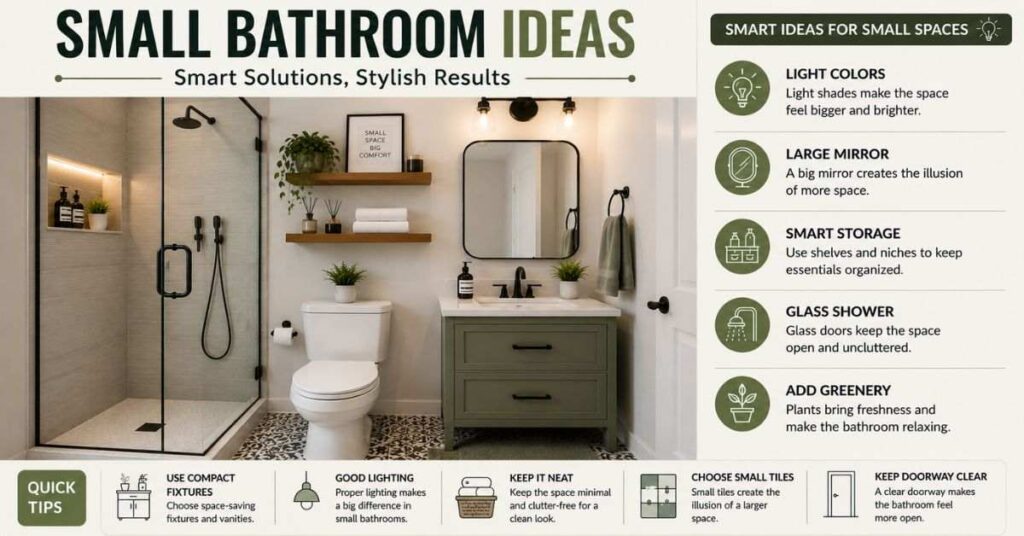
One of the most powerful ways to make a compact bathroom feel bigger is by using wall-mounted fixtures. Wall-mounted toilets and sinks save precious floor space. This design choice not only creates a sleek, modern look but also makes cleaning easier. Floating fixtures can make a small bathroom feel more spacious and allow for more flexible storage solutions underneath.
Wall-hung toilets are becoming increasingly popular for good reason. They can save up to 12 inches of floor space compared to traditional toilets. The tank hides inside the wall, leaving only the bowl visible. This creates clean lines and makes the room look more open.
Floating vanities work the same way. Instead of sitting on the floor, they attach to the wall. This lets you see more of the floor, which tricks your eyes into thinking the room is larger. You can also use the space underneath for storage baskets or decorative items.
When choosing wall-mounted fixtures, look for designs with simple shapes and neutral colors. These blend into the background and don’t overwhelm the space. Opting for minimalist fixtures with clean lines and simple designs can prevent a small bathroom from feeling cluttered. Choose sleek, compact fixtures that complement the bathroom’s overall aesthetic without dominating the space.
Smart Storage Solutions That Save Space
Storage is one of the biggest challenges in tiny bathrooms. The biggest problem with most small bathrooms is the inability to store necessary items such as towels and toiletries. The best way to improve a small bathroom is to add storage solutions that require little space or repurpose existing space that is going unused.
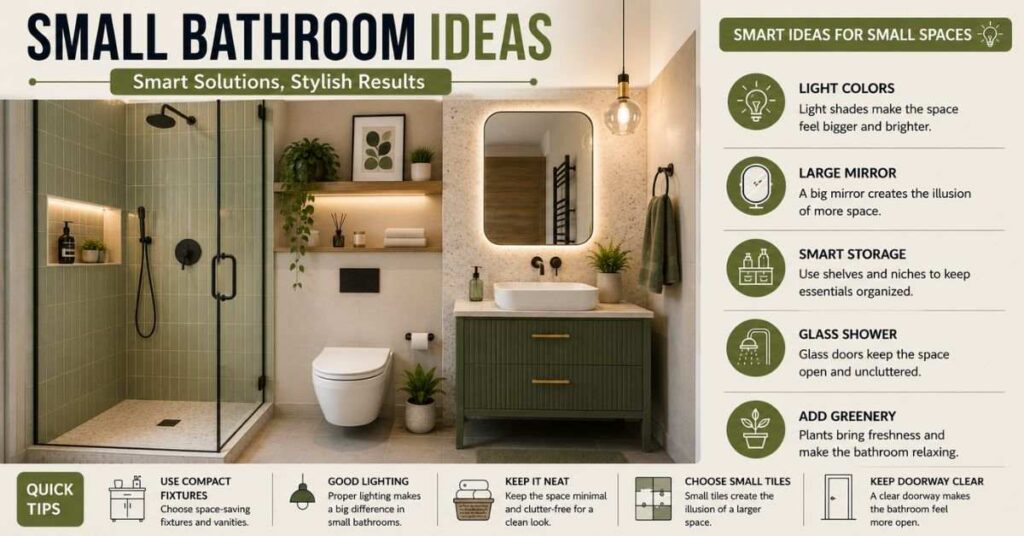
Recessed shelving is a game-changer. Instead of protruding from the wall, these shelves sit inside the wall itself. Embedding shelves into walls not only saves space but adds a modern touch. This technique is particularly effective in showers for storing toiletries.
Medicine cabinets that serve double duty are another excellent option. Choose mirrors that double as cabinets to store smaller items like medicine or grooming tools. This way, you get storage without adding bulk to your walls.
Think vertical when it comes to storage. In general, when space is tight, you should think vertical, or how you can go up with storage space, instead of out. Ideally, you want to leave plenty of floor space for moving around.
Here are more storage ideas that work well:
- Over-the-toilet shelving: The space above your toilet is often wasted. Add floating shelves or a slim cabinet.
- Behind-the-door organizers: Perfect for storing smaller items without taking wall space.
- Vanity drawers: Opt for vanities that come with built-in drawers rather than open shelves to maximize storage while maintaining a clean appearance.
Using Mirrors and Glass to Create Visual Space
Mirrors and glass are powerful tools for making any room appear larger. Incorporating mirrors into your small bathroom redesign will help you create the illusion of space. Large mirrors that take up a lot of wall space are an excellent option for small bathrooms.
A floor-to-ceiling mirror can double how big your bathroom looks. In Miami, a homeowner transformed their small bathroom by installing a floor-to-ceiling mirror along one wall. This simple addition created an illusion of depth and doubled the amount of light, making the bathroom feel twice as large.
Glass shower doors also help tremendously. Replacing shower curtains with clear glass doors can instantly make the bathroom feel more open and less cluttered. Unlike shower curtains, glass lets light flow through the entire room. Glass shower enclosures create a seamless look, making the bathroom appear larger by eliminating visual barriers.
If privacy is a concern, consider frosted or textured glass. You’ll still get the light-flow benefits while maintaining your privacy. The key is avoiding dark, solid barriers that block visual flow.
For small bathroom ideas focused on light, position mirrors across from windows when possible. This reflects natural light throughout the space and makes the room feel brighter and airier.
Choosing the Right Colors and Patterns
Color choices dramatically affect how big or small a space feels. Light and neutral colors like white, beige, or pastel shades reflect light, making the room appear airy and open.
However, 2026 bathroom trends show that all-white isn’t the only option anymore. Pure white bathrooms are no longer the default. In 2026, colour is back, but it is used with restraint. Soft greens, clay tones, muted blues and deeper neutrals are appearing on walls, furniture and tiles. These colours bring warmth without overwhelming the space. The classic all-white bathroom is shifting toward warmer, earthier palettes. In 2026, expect terracotta and clay tones, olive and deep greens, champagne and bronze neutrals, and moody charcoal shades. These colours add calm and sophistication, especially when balanced with fresh whites or natural stone.
Patterns can also make a difference. Incorporating vertical lines and patterns can visually elongate a small bathroom, drawing the eye upward. This can be achieved through tile arrangements, wallpaper, or decor elements, enhancing the perception of height.
Here’s a quick guide to color choices:
| Color Type | Effect on Space | Best For |
|---|---|---|
| Light whites and creams | Makes room feel larger and brighter | All bathroom sizes |
| Soft pastels | Adds warmth while keeping space open | Medium to small bathrooms |
| Warm earth tones | Creates cozy atmosphere | Accent walls or features |
| Dark colors | Can feel dramatic but may shrink space | Small accent areas only |
Corner Fixtures: Maximizing Every Inch
When floor space is limited, corners become valuable real estate. Optimising corner space with a corner sink or a quadrant shower enclosure can be a game-changer in small bathrooms. These fixtures fit snugly into corners, freeing up room for movement and other bathroom essentials. Corner sinks utilize typically unused space, opening up more room for movement. They’re especially useful in powder rooms or half-bathrooms where you don’t need a large vanity.
Corner showers are another excellent option. They tuck into the corner of the room, taking up less space than rectangular shower enclosures. Corner showers offer a stylish solution without compromising on showering space.
For those who still want a bathtub, consider a corner tub or compact model. A compact bathtub can provide the luxury of a bath in a small space. Corner or shorter tubs with deep soaking capabilities offer relaxation without requiring the length of standard bathtubs.
The key is measuring your space carefully before buying any fixtures. Even a few inches can make a big difference in how comfortable and functional your bathroom feels.
Lighting Strategies That Make Rooms Feel Bigger
Good lighting is essential for making compact bathrooms feel welcoming. Strategic lighting, including skylights, LED mirror lights, and under-cabinet lights, can transform a small bathroom. Well-placed lighting can make the bathroom feel larger and more welcoming, highlighting architectural features and improving functionality.
Layered lighting works best. This means combining different types of lights for different purposes:
- Task lighting: Bright lights near the mirror for grooming and makeup
- Ambient lighting: General overhead lighting for the whole room
- Accent lighting: Subtle lights to highlight design features
Lighting also steps up as a hero element: halo mirrors, LED wash lighting and soft indirect illumination create mood, dimension and a spa-like ambience.
Natural light is the best friend of any small space. If possible, add or enlarge windows. If possible, enlarge a window or use frosted glass to bring in more natural light while maintaining privacy.
For bathrooms without windows, consider adding a skylight or tubular daylight device. These bring natural light into interior rooms without compromising privacy.
Door Solutions That Free Up Space
The way your bathroom door opens matters more than you might think. Changing the direction that the door swings can help to make your bathroom feel a little larger. Better yet, install a pocket door to avoid taking up any space. And if your shower door swings open, consider replacing it with a sliding door to save space.
Pocket doors slide into the wall instead of swinging open. This eliminates the need for clearance space and gives you more usable floor area. Swap out your traditional bathroom door for a pocket or sliding door to eliminate the extra space needed to allow a door to swing into the room.
For shower enclosures, sliding doors are much better than swinging doors. When choosing a door style, consider space-saving options like sliding or hinged doors. Sliding doors are perfect for tight spaces where a swinging door might be impractical.
Barn-style sliding doors are trendy in 2026 and work well for bathroom entries. They slide along the wall rather than into it, making them easier to install than traditional pocket doors.
Budget-Friendly Updates vs. Full Renovations
Not everyone can afford a complete bathroom makeover. The good news is that even small changes can make a big impact. Here’s a breakdown of what different budgets can achieve:
| Budget Level | Typical Cost (2026) | What’s Included |
|---|---|---|
| Basic Refresh | $4,000 – $7,500 | 28Standard tiles, prefabricated cabinets, and simple lighting systems |
| Mid-Range Remodel | $12,000 – $20,000 | 28Custom designed cabinets, higher quality ceramic tiles, glass shower enclosures, and energy efficient fixtures |
| Full Renovation | $20,000 – $30,000+ | 25Premium materials, glass solutions, spa-style showers, custom-built furniture, and layout modifications |
The average bathroom remodel costs $6,456–$24,715 for spaces measuring 40–150 square feet.
If you’re on a tight budget, focus on these high-impact changes:
- Paint walls a fresh, light color
- Replace old hardware and fixtures
- Add a large mirror
- Install better lighting
- Declutter and organize existing storage
If the average cost feels intimidating, strategic choices can help control expenses. Refinishing a tub instead of replacing it, choosing cost-effective flooring that mimics natural materials, or keeping your existing plumbing layout can significantly reduce labor and material costs.
2026 Design Trends for Compact Spaces
Understanding current trends helps you make choices that look modern and stay stylish for years. Here’s what designers are focusing on in 2026:
Texture Over Pattern
One of the clearest shifts this year is the move away from flat, glossy surfaces everywhere. Texture is being used to give bathrooms depth and character. Fluted cabinetry, stone-effect tiles, plastered finishes and handmade-style tiles all feature strongly.
Warm Metals
Brushed nickel remains popular, but 2026 introduces richer metallics like Gold Finishes, Champagne and Bronze. These timeless metal tones sit beautifully within both light and dark colour stories, adding warmth and design confidence.
Organic Shapes
Soft edges, flowing forms and biomorphic shapes are becoming signature features in 2026 bathrooms. You’ll see curves appear through rounded or pill-shaped mirrors, profiling and fluting on vanities and cabinetry, arched shower screens and niches. These shapes soften architectural lines, creating bathrooms that feel relaxed, inviting and more inherently human.
Spa-Like Features
This year’s bathroom remodel trends are shifting toward wellness and warmth, bringing in spa-like features, organic materials, and smart technology to enhance daily comfort.
When applying small bathroom ideas from current trends, remember to use restraint. 7The key is restraint. One or two textured elements are enough to anchor a space. Anything more and the room starts to fight itself.
Frequently Asked Questions
What’s the most important change I can make in a small bathroom?
Installing wall-mounted fixtures like floating vanities and wall-hung toilets gives you the biggest visual impact by opening up floor space.
Are walk-in showers good for compact bathrooms?
Unless a bathtub is essential for your household, consider exploring walk-in shower ideas for your remodel. Using a walk-in shower design allows more customizable options. By eliminating a bulky bathtub, you can have more space for built-in shower storage and accessories.
What colors make small bathrooms look bigger?
Light colors like white, cream, soft gray, and pale blue reflect light and create an open, airy feeling.
How much does a small bathroom renovation cost in 2026?
A powder room or half bath remodel generally costs between $2,000 and $6,000 in 2026. These spaces are smaller and usually don’t require major plumbing or structural changes.
Can I renovate my small bathroom myself to save money?
Doing it yourself is one of the most economical methods to cut costs on a bathroom remodel. Your ability and experience will determine what tasks you can take on.
Conclusion
Transforming a tiny bathroom into a beautiful, functional space is absolutely possible with the right approach. Throughout this guide, we’ve explored essential small bathroom ideas that help you maximize every square inch. From wall-mounted fixtures that free up floor space to smart storage solutions that hide clutter, each strategy works together to create a room that feels larger and more comfortable.
Remember, you don’t need a huge budget to make meaningful changes. Simple updates like adding mirrors, improving lighting, and choosing the right colors can dramatically transform how your bathroom looks and feels. Planning a bathroom renovation requires understanding not just the costs, but also the impressive return on investment—mid-range bathroom remodels deliver 65-80% ROI, making them one of the best home improvement investments for 2026.
The best small bathroom ideas combine practical solutions with beautiful design. Even the smallest bathrooms can be transformed into stylish, functional spaces with the right design strategies. The ideas outlined offer innovative solutions to common small bathroom challenges, proving that size doesn’t limit style or comfort.