Introduction
Choosing the right flooring for your home is one of the most important decisions you’ll make during a renovation or new construction project. The floors you select will affect your home’s appearance, comfort, maintenance requirements, and even resale value for years to come. With so many flooring options available today, from traditional hardwood and tile to modern vinyl and laminate, making the right choice can feel overwhelming.
Among the newest innovations in home flooring, luxury vinyl plank and tile products have revolutionized how homeowners think about beautiful, durable, and practical floors. These advanced flooring solutions combine the stunning appearance of natural materials like hardwood and stone with modern technology that makes them waterproof, scratch-resistant, and incredibly easy to maintain. This combination of beauty and performance has made luxury vinyl one of the fastest-growing flooring categories in the home improvement industry.
Coretec flooring represents one of the most popular and well-respected brands in this category, known for pioneering rigid core technology that delivers exceptional stability and durability. Since its introduction, this innovative flooring has helped countless homeowners achieve the look of expensive hardwood or stone floors without the high cost, difficult maintenance, or water damage concerns associated with natural materials.
What Makes This Flooring Technology Different
Understanding what sets this flooring apart from traditional vinyl and other flooring types helps you appreciate why it has become such a popular choice among homeowners, builders, and designers. The key lies in its innovative construction and advanced materials technology.
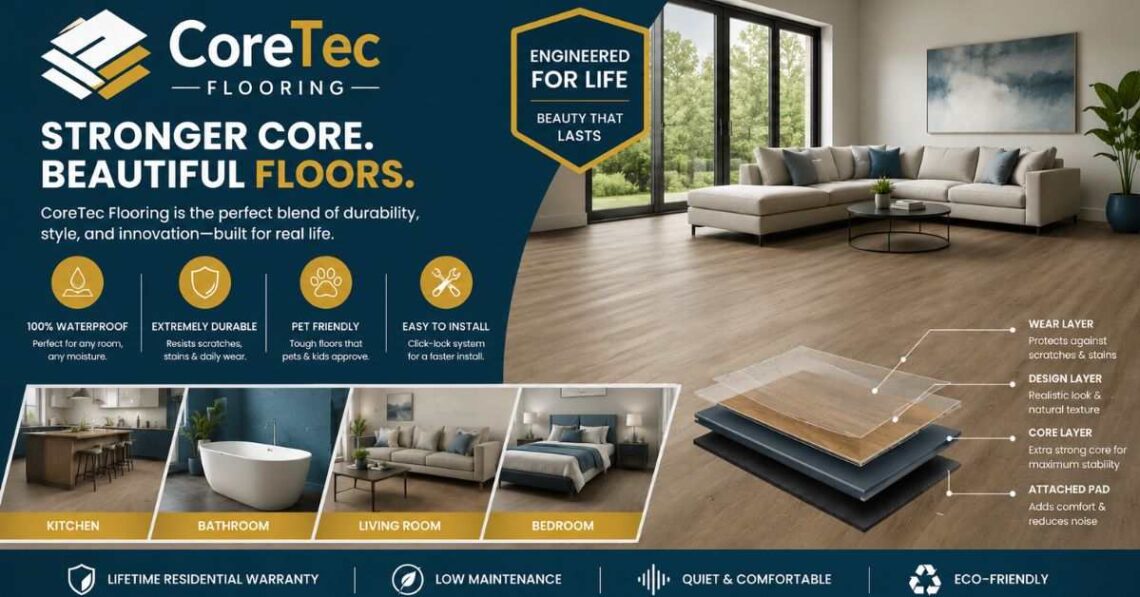
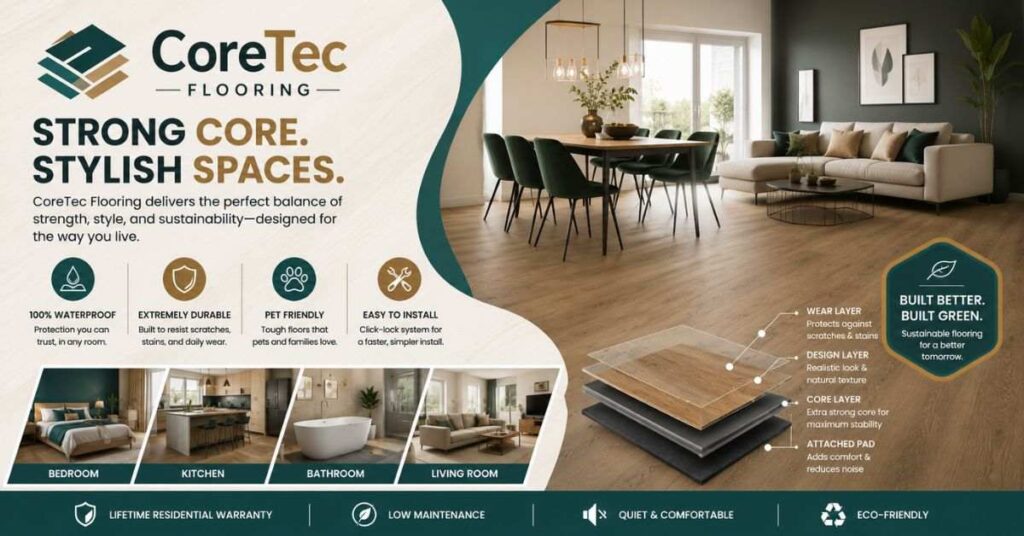
The most distinctive feature is its rigid core construction. Unlike traditional vinyl flooring that can be flexible and somewhat unstable, this product uses a dense composite core made from recycled wood and bamboo dust combined with limestone and virgin PVC. This unique core composition creates an incredibly stable foundation that resists expansion and contraction from temperature changes far better than traditional vinyl or laminate products.
This rigid core technology means the flooring can be installed over most existing subfloors without the extensive preparation often required for other flooring types. Minor imperfections in your subfloor won’t telegraph through to the surface as they might with flexible vinyl. This saves both time and money during installation while ensuring a smooth, professional-looking result.
The product features an attached cork underlayment in most of its product lines. This integrated cork backing provides natural sound dampening, making rooms quieter and more comfortable. It also adds a slight cushioning effect underfoot that makes the flooring more comfortable to stand on for extended periods compared to tile or hardwood.
Waterproof performance throughout the entire plank or tile, not just on the surface, sets this flooring apart from laminate products that can swell and deteriorate when exposed to moisture. The core material itself is completely waterproof, meaning spills, pet accidents, and even minor flooding won’t damage your floors. This makes it suitable for any room in your home, including bathrooms, kitchens, laundry rooms, and basements where moisture concerns would rule out hardwood or traditional laminate.
According to the National Wood Flooring Association, moisture damage represents one of the most common and costly flooring problems homeowners face. The waterproof construction of modern rigid core vinyl products directly addresses this widespread concern.
Understanding the Different Product Lines Available
The manufacturer offers several distinct product collections, each designed for specific needs, aesthetic preferences, and budget considerations. Understanding these differences helps you select the line that best matches your project requirements.
CoreTec Plus represents the original product line that introduced rigid core technology to the market. It features a 7-inch wide plank design with an 8-mil wear layer and the signature attached cork underlayment. This collection offers excellent performance for residential applications and comes in a variety of wood-look designs ranging from light oak to rich walnut tones.
CoreTec Plus Enhanced (often called CoreTec Plus XL) provides wider 9-inch planks for a more contemporary appearance that mimics the look of premium wide-plank hardwood. The enhanced version also features an improved 20-mil wear layer for additional durability, making it suitable for busier households or even light commercial applications.
CoreTec Pro Plus delivers professional-grade performance with an impressive 28-mil wear layer, making it one of the most durable luxury vinyl products available for residential use. This line is engineered for high-traffic areas and demanding environments while maintaining the residential warranty coverage homeowners need. The Pro Plus line also features enhanced visuals with deeper embossing and more realistic wood grain textures.
CoreTec One simplifies installation with its innovative Uniclic joint system that makes planks easier to lock together. This line is particularly popular with DIY installers because the click-lock mechanism requires less force and precision than traditional click systems. It’s available in both plank and tile formats with a variety of design options.
CoreTec Naturals focuses on authentic, realistic wood visuals that closely replicate the appearance of specific wood species. This collection emphasizes nuanced colors, realistic grain patterns, and sophisticated finishes that appeal to homeowners seeking the most convincing wood-look vinyl available.
Installation Methods and Requirements
One of the significant advantages of Coretec flooring is its versatile installation options that accommodate different subfloor conditions, skill levels, and project requirements. Understanding these installation methods helps you plan your project and decide whether professional installation or DIY makes sense for your situation.
Floating installation represents the most common and straightforward method. The planks or tiles click together and “float” over the subfloor without any glue or nails. This method works over concrete, existing vinyl, tile, or hardwood floors (with some limitations). The floating installation allows for easier future removal or replacement if needed and typically qualifies as a DIY-friendly project for homeowners with basic tools and moderate skill.
Glue-down installation provides maximum stability and is sometimes preferred for commercial applications or specific residential situations. A special pressure-sensitive adhesive is applied to the subfloor, and the planks are firmly pressed into place. This method creates a permanent installation that won’t shift but makes future removal more difficult. Glue-down installation works well over concrete subfloors in basements or on concrete slabs.
Subfloor requirements are relatively forgiving compared to some other flooring types, but proper preparation still matters for best results. The subfloor should be clean, dry, flat (within 3/16 inch over 10 feet), and structurally sound. Unlike tile installation, which demands perfectly flat surfaces, the rigid core construction tolerates minor imperfections. However, significant dips, humps, or damage should be repaired before installation.
Acclimation requirements vary by product line but generally require storing the unopened flooring in the installation room for 48 hours before beginning work. This allows the material to adjust to the room’s temperature and humidity, though the rigid core construction makes these products less sensitive to climate conditions than traditional vinyl or laminate.
Expansion gaps must be maintained around the room perimeter, typically 1/4 inch, to allow for any minimal expansion and to accommodate building movement. Quarter-round or shoe molding installed after the flooring covers these gaps while allowing the necessary expansion space.
Tools required for floating installation include a measuring tape, utility knife with extra blades, straight edge, tapping block, pull bar, and underlayment tape (if additional underlayment is needed). Most homeowners already own these basic tools or can purchase them inexpensively. Professional installers use additional specialized tools, but they’re not necessary for successful DIY installation.
According to the National Association of Home Builders, professional installation typically costs $2-5 per square foot for luxury vinyl plank, while materials cost $3-8 per square foot depending on the product line selected.
Waterproof Performance and Moisture Resistance
The waterproof characteristics of this flooring represent one of its most significant advantages and a primary reason many homeowners choose it over traditional hardwood or laminate options. Understanding exactly what “waterproof” means in practical terms helps you use this flooring appropriately.
The core material itself, composed of limestone, recycled wood, bamboo dust, and virgin PVC, is completely impervious to water. Unlike laminate flooring with a wood-fiber core that swells and deteriorates when wet, this rigid core won’t absorb moisture, swell, warp, or degrade from water exposure. This fundamental waterproof construction distinguishes it from “water-resistant” products that can tolerate brief moisture exposure but aren’t truly waterproof.
Surface water from spills, pet accidents, or even standing water won’t damage properly installed floors. You can mop the floors, wipe up spills without panic, or deal with a broken washing machine hose without facing floor replacement. This peace of mind is particularly valuable in kitchens, bathrooms, laundry rooms, mudrooms, and basements where moisture risks are higher.
Proper installation remains critical for waterproof performance. While the planks themselves are waterproof, water can potentially seep between planks if they’re not properly clicked together or if expansion gaps aren’t maintained. Most product lines require that seams be tightly locked without gaps. Some collections recommend using a small bead of waterproof silicone in the seams for areas with high moisture risk, though this isn’t necessary for typical residential installations.
Subfloor protection works both ways: the waterproof flooring protects against surface moisture, and most product lines include moisture barrier properties that help protect against minor subfloor moisture as well. However, this doesn’t eliminate the need to address serious moisture problems like basement water intrusion or concrete slab moisture issues. Always test concrete subfloors for excessive moisture before any flooring installation.
Bathroom and kitchen applications benefit tremendously from waterproof performance. You can install this flooring directly under toilets, around bathtubs and showers, and near sinks without the water-damage concerns that make hardwood inappropriate for these locations.
The Resilient Floor Covering Institute, an industry trade association, notes that waterproof flooring has become the fastest-growing category in residential flooring, largely due to its practical moisture resistance combined with attractive aesthetics.
Durability, Wear Layer, and Long-Term Performance
Understanding how this flooring holds up to real-world wear and tear helps you set appropriate expectations and choose the right product line for your specific needs and traffic levels.
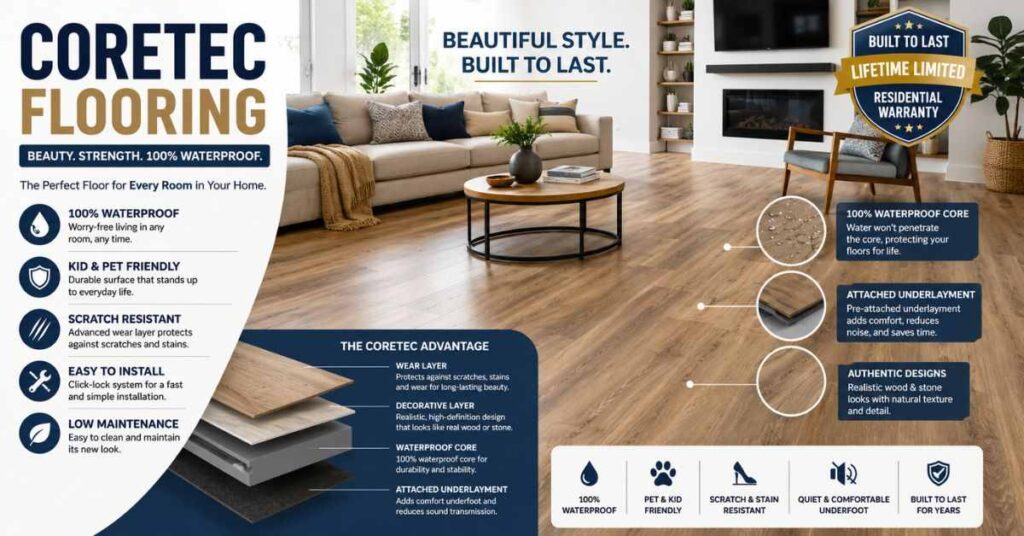
The wear layer represents the clear protective coating on the flooring surface that determines scratch resistance and long-term appearance retention. Coretec Flooring offers wear layers ranging from 8 mil in basic lines to 28 mil in professional-grade products. For context, residential warranties typically require a minimum 12-mil wear layer, while commercial applications often specify 20-mil or greater.
Scratch resistance varies by wear layer thickness and product line. The flooring resists typical household scratches from furniture moving, pet nails, and daily foot traffic far better than hardwood, which can scratch easily. However, it’s not completely scratch-proof; dragging heavy furniture without protective pads or allowing abrasive grit to accumulate on the surface can cause scratches over time. The enhanced wear layers in premium product lines provide superior scratch resistance for households with large dogs or high activity levels.
Dent resistance is one of this flooring’s strong points. The dense rigid core construction resists denting from dropped objects, furniture weight, and high heels far better than softer vinyl products or even some hardwood species. While extreme impacts can still damage the surface, normal household use rarely causes denting concerns.
UV stability means the flooring won’t fade or discolor from sunlight exposure as dramatically as some hardwood species or older vinyl products. Modern UV coating technology in the wear layer protects against sun damage, though using window treatments in rooms with intense, direct sun exposure still makes sense for all flooring types to prevent any gradual fading over many years.
Residential warranties typically range from 25 years to lifetime depending on the product line, covering manufacturing defects, wear-through, and staining. These warranties demonstrate manufacturer confidence in long-term performance. However, warranties include limitations and exclusions, so reading the full warranty documentation before purchase is important.
Real-world longevity depends on traffic levels, maintenance practices, and product selection. In typical residential settings with reasonable care, quality luxury vinyl plank flooring commonly performs well for 15-25 years or more. The rigid core construction and substantial wear layers in CoreTec products position them at the higher end of luxury vinyl longevity expectations.
Maintenance Requirements and Cleaning Methods
One of the most appealing aspects of this flooring type is its simple maintenance requirements compared to traditional hardwood, tile, or carpet. Understanding proper care practices helps you keep your floors looking beautiful while avoiding practices that could cause damage.
Daily cleaning requires only sweeping, vacuuming (without a beater bar), or dry-mopping to remove dirt and debris. This basic cleaning prevents abrasive particles from scratching the surface over time. Unlike hardwood floors that can be damaged by certain vacuum types, this flooring tolerates most cleaning methods as long as you avoid beater bars that could potentially scratch the surface.
Damp mopping works perfectly for routine cleaning using plain water or pH-neutral vinyl floor cleaner. The waterproof construction means you don’t need to worry about using too much water or damaging the floors with moisture as you would with hardwood. However, standing water should still be wiped up rather than left to sit, and excessive water can potentially seep between planks if not properly installed.
Avoid certain cleaning products, including abrasive scrubbers, steam mops, wax, polish, or harsh chemicals. The wear layer requires no additional protective coatings, and some cleaning products can actually damage the finish or leave residue that attracts dirt.
Stain resistance is excellent thanks to the protective wear layer. Most household spills, including wine, coffee, juice, or pet accidents, wipe up easily without staining if cleaned reasonably promptly. The non-porous surface prevents liquids from absorbing into the flooring material, unlike hardwood or grout lines in tile floors.
Preventive maintenance includes using doormats at entrances to trap dirt and moisture before it reaches your floors, placing felt pads under furniture legs to prevent scratches when moving furniture, and using area rugs in high-traffic paths to reduce wear. These simple practices extend floor life and maintain appearance.
Repairing damage is possible for minor scratches using vinyl floor repair kits available from flooring retailers. However, individual damaged planks can also be replaced if necessary, one advantage of floating floor installations where damaged sections can be removed and new planks installed without replacing entire rooms of flooring.
According to Consumer Reports testing, luxury vinyl plank flooring requires less maintenance time than hardwood, tile, or carpet while providing comparable or superior appearance when properly maintained.
Cost Considerations and Budget Planning
Understanding the complete cost picture not just material prices but also installation, preparation, and long-term expenses—helps you budget appropriately and compare this flooring option to alternatives fairly.
| Cost Component | Budget Range | Mid-Range | Premium Range |
|---|---|---|---|
| Material (per sq ft) | $3.00 – $4.50 | $4.50 – $6.50 | $6.50 – $9.00 |
| Professional Installation (per sq ft) | $2.00 – $3.00 | $3.00 – $4.00 | $4.00 – $5.50 |
| Underlayment (if needed) | $0.50 – $0.75 | N/A (integrated) | N/A (integrated) |
| Transition strips & molding | $3 – $8 per linear foot | $8 – $15 per linear foot | $15 – $25 per linear foot |
| Subfloor preparation | $1 – $3 per sq ft (if needed) | Variable | Variable |
| Removal of existing flooring | $1 – $2 per sq ft | Variable | Variable |
| Total installed cost | $6 – $10 per sq ft | $8 – $12 per sq ft | $12 – $16 per sq ft |
DIY installation can significantly reduce costs by eliminating professional labor charges. For a moderately skilled homeowner with basic tools, floating installation represents a realistic DIY project that could save $2-5 per square foot. However, this requires adequate time, patience, and attention to installation instructions for best results.
Long-term cost advantages include minimal maintenance expenses (no refinishing like hardwood, no grout cleaning like tile), excellent durability that delays replacement, and potential energy efficiency benefits from the insulating cork underlayment. These factors make the cost-per-year-of-use favorable compared to some cheaper alternatives that require replacement sooner.
Compared to alternatives, quality luxury vinyl typically costs less than solid hardwood ($8-15 per square foot installed) and natural stone or tile ($10-20 per square foot installed), while performing comparably or better in many practical aspects. It costs more than basic laminate ($3-7 per square foot installed) but offers superior waterproof performance and often better aesthetics.
The return on investment for flooring improvements generally ranges from 70% to 80% of the investment for mid-range materials, according to Remodeling Magazine’s Cost vs. Value report. Quality flooring appeals to home buyers and can influence sale speed and price, though location and overall home condition matter more than specific flooring choices.
Environmental Impact and Sustainability Features
Environmentally conscious homeowners often ask about the sustainability and environmental impact of their flooring choices. Understanding the environmental aspects of this product helps you make informed decisions aligned with your values.
Recycled content in the core composition includes recycled wood and bamboo dust that would otherwise go to waste. This use of post-industrial recycled materials reduces waste and makes productive use of materials from other manufacturing processes. However, the product also contains virgin PVC (vinyl), which raises environmental concerns for some consumers.
Vinyl concerns stem from PVC production and disposal. Some environmental advocates raise concerns about chemicals used in vinyl manufacturing and the challenges of recycling vinyl products at end of life. However, the vinyl flooring industry has made significant improvements in recent years, and products meeting FloorScore certification have been tested for low chemical emissions.
FloorScore certification is achieved by most CoreTec product lines, indicating they meet stringent indoor air quality standards set by the Resilient Floor Covering Institute in collaboration with Scientific Certification Systems. This certification ensures the flooring emits minimal volatile organic compounds (VOCs) that could affect indoor air quality.
Phthalate-free formulations have become standard in quality vinyl flooring products, addressing previous concerns about plasticizers used in vinyl manufacturing. Most modern luxury vinyl products, including this brand’s offerings, are phthalate-free and use alternative plasticizers considered safer.
Durability as sustainability represents an often-overlooked environmental advantage. Products that last 20+ years in service create less waste than flooring requiring replacement every 5-10 years. The long service life and low maintenance requirements reduce the environmental impact per year of use compared to less durable alternatives.
Renewable alternatives like bamboo, cork, or responsibly harvested hardwood appeal to consumers prioritizing fully renewable materials. However, these natural products often lack the waterproof performance and durability that make luxury vinyl practical for moisture-prone areas or high-traffic spaces.
According to the U.S. Green Building Council’s LEED rating system, flooring products can contribute to green building certification through factors including recycled content, low emissions, local manufacturing, and durability—areas where quality luxury vinyl products can perform reasonably well.
Comparing Other Flooring Options
Understanding how coretec flooring compares to alternative flooring types helps you make the best choice for your specific needs, priorities, and circumstances.
| Flooring Type | Water Resistance | Scratch Resistance | Maintenance | Cost Range | Best For |
|---|---|---|---|---|---|
| CoreTec/Luxury Vinyl | Excellent (waterproof) | Very Good | Very Easy | $$ – $$$ | Kitchens, bathrooms, basements, busy homes |
| Hardwood | Poor (damage from water) | Fair (scratches easily) | Moderate (refinishing needed) | $$$ – $$$$ | Formal areas, bedrooms, living rooms (dry areas only) |
| Laminate | Fair (water resistant only) | Good | Easy | $ – $$ | Bedrooms, living rooms, offices (not wet areas) |
| Tile (ceramic/porcelain) | Excellent | Excellent | Moderate (grout care) | $$ – $$$$ | Bathrooms, kitchens, entryways |
| Engineered Hardwood | Fair (better than solid wood) | Fair | Moderate | $$ – $$$ | Most rooms except bathrooms |
| Carpet | Poor | Poor (stains easily) | Difficult | $ – $$$ | Bedrooms, living rooms, comfort priority |
Solid hardwood offers timeless beauty and refinishing potential that can extend its life beyond other options. However, it requires careful maintenance, scratches relarelatively easily, cannot tolerate moisture, and costs significantly more than luxury vinyl. For dry areas where authentic wood aesthetics are priorities and budget allows, hardwood remains unmatched. For practical areas with moisture exposure, luxury vinyl makes more sense.
Laminate flooring costs less than quality luxury vinyl but lacks waterproof performance; its wood-fiber core will swell and degrade from water exposure. While water-resistant laminate exists, it doesn’t match the complete waterproof construction of rigid core vinyl. Laminate works fine in dry areas but isn’t suitable for bathrooms, kitchens, or basements where moisture is a concern.
Ceramic or porcelain tile provides excellent durability and water resistance comparable to luxury vinyl but requires more expensive and complex installation, needs ongoing grout maintenance, and feels cold and hard underfoot. Tile works beautifully in bathrooms and kitchens but lacks the warmth and comfort of vinyl plank products with cork underlayment.
Engineered hardwood offers a middle ground between solid hardwood and luxury vinyl, with better moisture resistance than solid wood but not waterproof like vinyl. It provides authentic wood construction at a lower cost than solid hardwood but still can’t match vinyl’s practical waterproof performance or scratch resistance.
Design Versatility and Aesthetic Options
Modern luxury vinyl plank and tile products have evolved dramatically from early vinyl flooring that looked obviously synthetic. Today’s premium products offer remarkably realistic wood and stone visuals that satisfy even discerning design sensibilities.
Wood-look options dominate the luxury vinyl category and represent the most popular choice among homeowners. Available wood tones range from light white oak and pale driftwood to medium walnut and rich espresso, with everything in between. Multiple plank widths, from traditional 6-7 inch to contemporary 9-inch wide planks, allow you to match current design trends or personal preferences.
Realistic textures set premium products apart from budget alternatives. Advanced embossing technology creates grain patterns, knots, and surface variations that closely match real wood characteristics. Some product lines feature “embossed in register” technology where the surface texture aligns precisely with the visual grain pattern beneath, creating an even more convincing wood appearance.
Stone and tile looks provide options for homeowners who prefer the aesthetic of natural stone, slate, travertine, or ceramic tile without the cold, harsh surface of actual stone. These options work particularly well in bathrooms, kitchens, and entryways where stone aesthetics traditionally appear.
Contemporary patterns including chevron, herringbone, and mixed-width installations allow creative design approaches beyond simple straight plank layouts. While these patterns require more careful planning and cutting during installation, they create distinctive, upscale appearances.
Color coordination with cabinets, walls, and furniture becomes easier with the vast array of available colors and tones. Cool grays complement modern aesthetics with white and stainless steel finishes. Warm browns work with traditional wood furniture and warmer color palettes.
Visual realism continues improving with each product generation. While vinyl flooring won’t perfectly replicate solid hardwood when examined closely, from normal standing and walking positions, high-quality luxury vinyl creates convincing wood or stone appearances that satisfy most homeowners who prioritize practical performance alongside aesthetics.
Making Your Decision: Is This the Right Flooring for You?
After exploring all aspects of this flooring option, you need a framework for deciding whether it’s the right choice for your specific situation, priorities, and home.
Choose this flooring if you
- Need waterproof performance for bathrooms, kitchens, basements, or homes with pets/children
- Choose this flooring if you want the aesthetics of hardwood or stone without the high cost or difficult maintenance.
- Prioritize durability and scratch resistance for busy households
- Prefer easy maintenance requiring minimal time and effort
- Want DIY-friendly installation that moderately skilled homeowners can tackle
- Need flooring that performs well over imperfect subfloors
- Value warranty protection and long-term performance confidence
Consider alternatives if you
- Strongly prefer authentic hardwood and have a budget for solid wood plus ongoing maintenance
- Are installing in perfectly dry areas where moisture is never a concern
- Want the absolute lowest possible material cost regardless of performance trade-offs
- Prefer the cold, hard surface of tile (some people actually do)
- Have specific environmental concerns about vinyl products that outweigh practical advantages
- Already own and love carpet and aren’t interested in changing floor type
Room-by-room recommendations help you decide where to use this flooring versus alternatives. It excels in kitchens, bathrooms, basements, laundry rooms, mudrooms, and entryways where moisture exposure makes hardwood impractical. It works equally well in living rooms, dining rooms, hallways, and bedrooms, where its easy maintenance and durability provide advantages over hardwood. Consider hardwood for formal areas where you specifically want authentic wood aesthetics and moisture will never be an issue.
Budget reality matters in flooring decisions. If the budget is extremely limited, basic laminate costs less while providing reasonable performance in dry areas. If budget allows and you want the best, premium-grade luxury vinyl delivers exceptional performance and aesthetics that approach or match hardwood in many respects while exceeding hardwood in practical waterproof performance.
Frequently Asked Questions
How long does CoreTec flooring typically last in residential homes?
With proper maintenance, quality luxury vinyl plank typically lasts 15-25 years or more in residential settings, with premium lines potentially exceeding this range.
Can this type of flooring be installed over existing tile or hardwood?
Yes, floating installation works over most existing hard-surface flooring if the surface is clean, level within specifications, and structurally sound.
Does luxury vinyl flooring add value to your home?
Quality flooring improvements generally return 70-80% of investment and can influence sale speed and buyer impressions, though location and condition matter more than specific flooring types.
What’s the best way to clean waterproof vinyl plank flooring?
Regular sweeping or vacuuming plus damp mopping with pH-neutral vinyl cleaner or plain water provides all the cleaning most homes need.
Is professional installation necessary, or can homeowners install it themselves?
Moderately skilled DIYers successfully install floating vinyl plank with basic tools and patience, though professional installation ensures optimal results and may be required for warranty coverage.
Conclusion
After exploring all aspects of coretec flooring, you now have comprehensive knowledge to make an informed decision about whether this innovative flooring solution is right for your home. This waterproof luxury vinyl option has revolutionized residential flooring by combining stunning aesthetics with exceptional practical performance that addresses common homeowner concerns about moisture damage, difficult maintenance, and durability.
The rigid core construction, integrated cork underlayment, waterproof performance, and realistic wood and stone visuals make these products suitable for virtually any room in your home. Whether you’re renovating a bathroom, upgrading a kitchen, finishing a basement, or replacing flooring throughout your entire house, this flooring technology deserves serious consideration alongside traditional options.
Remember that successful flooring projects require proper planning, careful product selection, appropriate installation, and ongoing maintenance. Take time to order samples, see how they look in your specific lighting, and read product specifications to ensure you select the right product line for your needs. If you’re unsure about installation, professional services ensure optimal results and warranty protection.
The investment in quality flooring pays dividends in daily enjoyment, reduced maintenance stress, and long-term performance that delays the need for future replacement. Your floors form the foundation of your home’s appearance and functionality; they deserve thoughtful selection.
Ready to transform your home with beautiful, durable, waterproof flooring? Visit a flooring showroom to see samples in person, order samples to test in your space, consult with design professionals about your specific application, and take that first step toward floors you’ll love for decades.