Plenty of people search “about Droven.io” because the name keeps popping up in conversations about artificial intelligence, automation, and emerging technology. But the website itself can feel confusing at first glance. Is it a software tool? An online course? A news site? This guide clears up the confusion in plain, everyday language.
We looked closely at what the platform publishes, how it explains technical ideas, and who it seems built for. You will not find hype or a sales pitch here just a clear, honest breakdown anyone can follow, even a student new to the subject.
Artificial intelligence is moving fast, and most people do not have time to read research papers or sit through long technical courses that is the gap knowledge platforms like this one try to fill. By the end, you will know what to expect, what it’s good for, and what to double-check elsewhere.
What Is Droven.io?
Let’s start with the basics about Droven.io before going deeper. In simple terms, it is a free online publication that explains artificial intelligence, automation, machine learning, cybersecurity, and cloud computing in everyday language. It is not software you download or log into, and it is not a product you buy. Think of it as a digital magazine focused entirely on technology trends, written for regular people instead of engineers.
The site does not build AI tools itself. Instead, it writes about the tools, trends, and ideas shaping the tech world, breaking each topic down so a small business owner, a student, or a curious reader can follow along without a computer science degree.
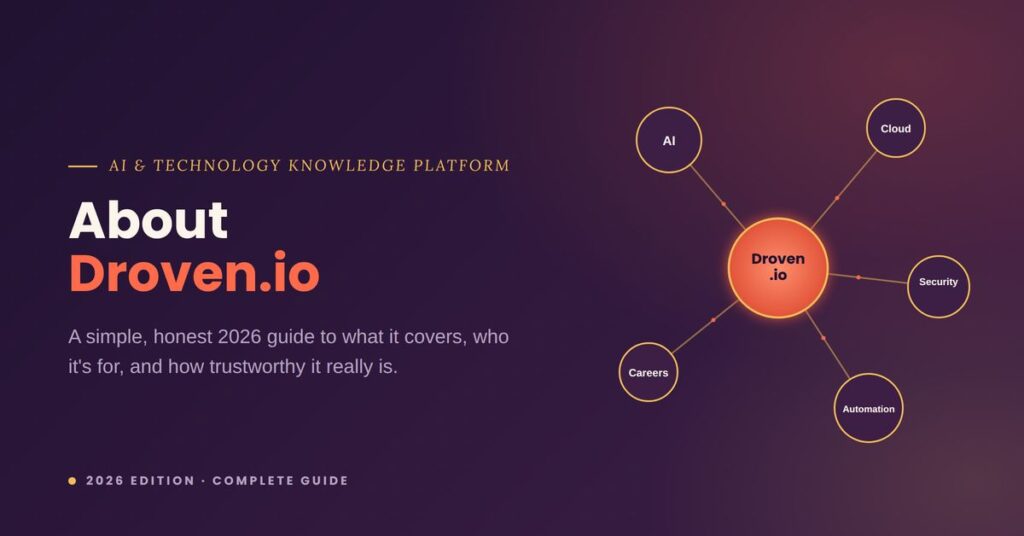
Based on its public pages, the platform organizes articles into clear categories such as artificial intelligence, automation, software development, cybersecurity, cloud computing, and career guidance for tech jobs. That structure helps readers find what they need quickly instead of scrolling through unrelated posts.
In short, the platform works best as a starting point for learning, not a finishing point for buying or building. Most readers use an article here to understand a topic first, then move on elsewhere to take the next step.
Where Does the Name “Droven” Come From?
The word “Droven” is not a common English word, so it naturally raises questions. Public information about the brand suggests the name draws loosely from an older, regional form of the word “drive” used here to suggest being driven by curiosity, purpose, and a desire to make confusing technology easier to understand.
This naming choice also explains why some readers confuse the site with the word “driven.” The two are pronounced almost the same way, and the meaning behind them overlaps closely. If you searched for “driven” technology platforms and landed here instead, that mix-up is common.
Names matter less than content, but the meaning behind a brand still offers a small clue about its mission here, it positions the site as a guide rather than a gatekeeper, built to walk readers through new ideas instead of locking information behind a paywall.
Either way, it’s useful context before exploring the actual content the platform publishes.
What Topics Does the Site Cover?
A frequent question about Droven.io is simple: what does it actually cover? Based on its visible category structure, content spans six broad areas. The table below breaks them down.
| Topic Area | What You’ll Find There |
|---|---|
| Artificial Intelligence | Plain-language explainers on AI tools, generative AI, and how machine learning models work |
| Automation | Guides on workflow automation, robotic process automation (RPA), and cutting repetitive tasks |
| Cybersecurity | Articles on data protection, online threats, and everyday digital safety habits |
| Cloud Computing | Explanations of cloud storage, service models, and why businesses are leaving physical servers behind |
| Software Development | Tutorials and overviews aimed at developers and tech learners |
| Careers & Future of Work | Guidance on tech job roles, in-demand skills, and where the job market is heading |
This range is broader than a single-topic blog but narrower than a general news outlet, and that balance looks intentional. Readers researching one specific area, like cloud migration or AI automation, can usually find a dedicated explainer instead of a short, vague summary buried inside a longer article.
Content depth can also vary between articles, since more than one contributor appears to write for the site. That is normal for editorial platforms with multiple writers, but it means readers should check the publish date rather than assume every article carries equal depth.
How It Explains Hard Ideas in Plain Words
Technical subjects like neural networks, large language models, and cloud architecture can sound intimidating. What stands out across the site’s articles is a consistent effort to avoid jargon, often starting with a real-world comparison before the fuller explanation.
For example, an article on cloud computing might compare renting server space to subscribing to a streaming service: you stop owning physical equipment and instead pay only for what you use. That kind of simple comparison helps non-technical readers grasp a concept far faster than a textbook definition would.
This writing style fits a wider trend in 2026. As more non-technical professionals are now expected to understand AI basics for their jobs, plain-language explainers have become more valuable than dense whitepapers. If you want a more structured, step-by-step way to build these foundational skills, the free AI literacy course from the U.S. Department of Labor is a solid, government-backed starting point that pairs well with what you’ll read on independent knowledge sites.
The takeaway: if a topic feels too technical elsewhere, a plain-language explainer is often the easier entry point before tackling more advanced material.
Who Gets the Most Value From It?
Not every reader needs the same kind of resource, so it helps to know who benefits most. If you are still unsure about Droven.io and whether it is worth your time, this breakdown should help.
- Small business owners trying to understand AI tools before spending money on software
- Students and career-changers exploring fields like machine learning, cybersecurity, or cloud computing
- Marketing and operations professionals who need to understand automation without becoming developers
- General readers who simply want to stay current on technology trends without information overload
It is less suited for deep technical implementation, legal or financial decisions, or anything requiring certified, professional advice — most editorial technology sites include disclaimers saying their content should not replace professional consultation.
A useful way to think about it: use this kind of resource the way you would use a well-written magazine article to build understanding and ask better questions not the way you would use a signed contract. For deeper learning once you’ve grasped the basics, our guide to AI automation tools and our beginner’s cloud computing guide go further into specific use cases.
Is It Free? How Does It Stay Running?
A common practical question about Droven.io is whether using it costs anything. Based on publicly available information, the answer is no there is no subscription, no paywall, and no account required to read articles. That matters because early-stage research into a new technology topic should not require a credit card.
So how does a free site cover its costs? Like most independent editorial publications, it likely relies on a mix of advertising and possibly sponsored or affiliate content, which is standard for sites of this kind. The platform’s own positioning emphasizes editorial independence, meaning recommendations are not supposed to be driven by which company pays the most.
That claim is reasonable to take at face value while still applying healthy skepticism. Readers should look for clear labeling of sponsored content, check whether a tool recommendation explains both strengths and limits, and notice whether the same handful of products get promoted in every article. Those are simple, practical signals of editorial honesty that anyone can check without technical skills.
Knowledge Platforms vs. AI Tools vs. Online Courses
It helps to see how a content-based knowledge platform fits next to other resources people commonly use to learn about AI. None of these categories is “better” outright; they simply serve different needs at different stages.
| Resource Type | Best For | Limitation |
|---|---|---|
| Knowledge Platform (articles, guides) | Building understanding before you act | Does not perform tasks for you |
| AI Tool (chatbot or automation app) | Getting work done directly | Requires you to already know what you need |
| Online Course (structured lessons) | Deep, step-by-step skill building | Takes more time and sometimes costs money |
| Government Resource (NIST, DOL, etc.) | Verified standards and free training | Broader scope, not tool-specific |
A site built around explainer articles sits firmly in the first row. It will not write code for you or automate your invoices. What it can do is help you understand what a tool does before you commit budget or time to it. That sequence learn first, choose a tool second, then go deeper with a course if needed tends to save people from expensive trial and error. The NIST AI Risk Management Framework is a good example of a free, authoritative government resource worth pairing with editorial content like this, especially for anyone evaluating AI risk for a business.
How Trustworthy Is the Information?
Trust matters more than ever in 2026, since so much online content is now AI-generated at scale. Before relying on any single source, it helps to check a few transparency facts about Droven.io and any similar site.
Look for these signals: Are author names shown on articles? Are publish or update dates visible? Does the site cite outside sources for statistics rather than stating numbers without support? Does it list contact information, a privacy policy, and clear terms of use? Public pages reviewed for this guide do show contact details, policy pages, and dated articles, which are reasonable baseline trust signals for an editorial site.
What is less visible is detailed founder or ownership information, which is common for newer technology publications but still worth noting. This does not automatically mean a site is untrustworthy many legitimate niche publications keep a lower public profile than major outlets but important claims still deserve a second check.
According to the Stanford HAI AI Index, organizational AI adoption reached 88 percent in 2026, which shows just how mainstream this technology has become and why reliable, independent information about it matters more than ever. The safest approach is simple: use editorial content to learn the landscape, then verify high-stakes facts through official sources, government data, or academic research before making a major decision.
Practical Tips to Use the Site Well
A few habits make any knowledge platform more useful, including this one.
First, start with the category closest to your actual goal instead of browsing randomly. If you are researching automation for your business, go straight to that section rather than reading unrelated AI news first.
Second, treat every article as a starting point, not a final answer. Cross-check important numbers, especially statistics about market size or adoption rates, against the original source whenever one is cited.
Third, pay attention to publish dates, since an article from two years ago may describe tools or pricing that no longer exist. Fourth, bookmark the sections you return to most, whether that’s career guidance, automation, or cybersecurity.
Finally, pair what you read with at least one structured learning resource, especially if you plan to apply the knowledge professionally. Reading builds awareness; a course or framework builds applied skill. Our cybersecurity basics guide is a good next step if data protection is part of your focus area.
Why This Kind of Resource Matters More in 2026
AI is no longer a niche interest. It now touches hiring, marketing, customer service, manufacturing, and dozens of other everyday business functions. With that much change happening quickly, the gap between people who understand the basics and people who do not has become a real disadvantage, not just an inconvenience.
That is exactly why plain-language knowledge platforms have grown in importance. They translate fast-moving, technical research into something a non-specialist can act on without years of formal training. Government programs are recognizing this gap too. Initiatives such as the Department of Labor’s AI literacy push reflect a broader shift: understanding AI is becoming a basic workplace skill, not an optional extra reserved for engineers.
Frequently Asked Questions
What kind of website is Droven.io?
It is a free independent educational platform that publishes articles on AI, automation, cloud computing, cybersecurity, and tech careers in plain, everyday language.
Does it cost anything to access?
No all content is freely available without a subscription, login, or payment required.
How do I know which articles to trust?
Check the publish date, look for cited sources, and verify important statistics through official or academic resources before acting on them.
Is this platform useful for complete beginners?
Yes content is specifically written for readers without technical backgrounds, making it a strong starting point for anyone new to these topics.
Is there anything important to know about Droven.io before relying on it as a main source?
The key thing to know about Droven.io is that it works best as a starting resource, not a sole authority pair it with government frameworks, academic research, and hands-on practice for the best results.
Conclusion
Technology does not have to feel overwhelming, even when it changes as fast as it has in the past few years. Hopefully, this guide cleared up the basics about Droven.io: it is a free, editorial knowledge platform that explains AI, automation, cybersecurity, and cloud computing in plain language, built for readers who are not engineers. It works best as a first step in your research, not a final word pair it with official frameworks, government resources, and hands-on practice as you go deeper into any topic.
If you are just starting to explore artificial intelligence and automation, the smartest move is simple: read a few explainer articles to build your footing, check the free Department of Labor AI literacy course for structured basics, and keep a short list of trusted sources you return to often. Start small, stay curious, and verify before you act on anything that affects your money, your business, or your career. That one habit will serve you well no matter how fast technology keeps changing in the years ahead.