
Introduction
Running a business today is much easier than it was ten years ago, thanks to the many technology tools available. Business software helps companies stay organized, work faster, and serve customers better. Whether you own a small bakery, manage a growing online store, or manage a large team, having the right digital tools can make your daily work smoother and more productive.Proven Business Software Gonzay Com Success Guide 2026 helps businesses discover powerful tools, streamline daily operations, boost productivity, and achieve sustainable growth in today’s competitive digital marketplace.
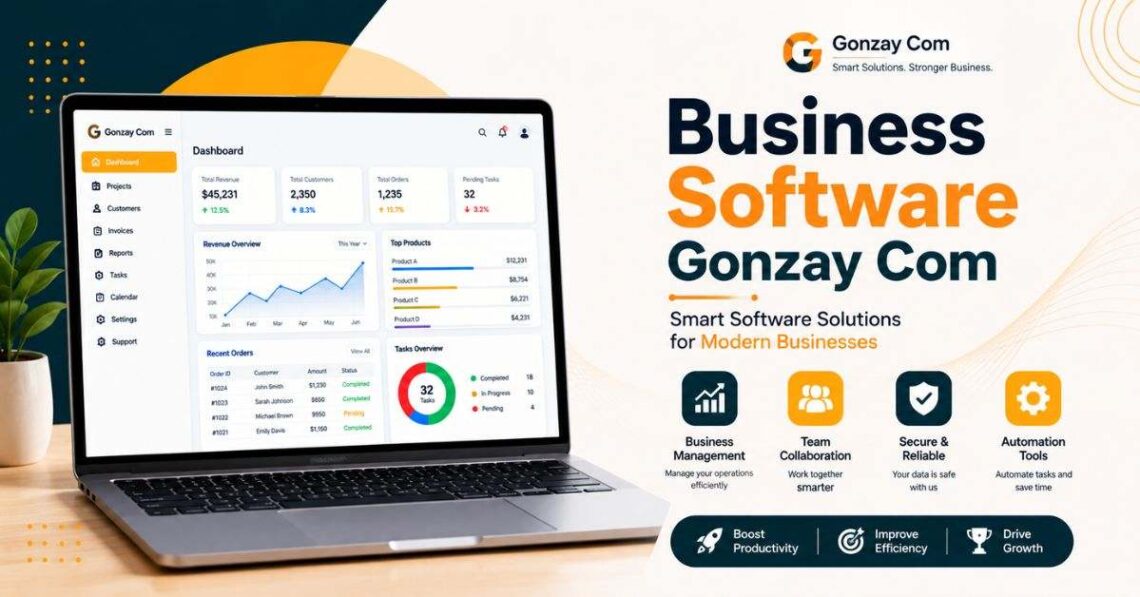
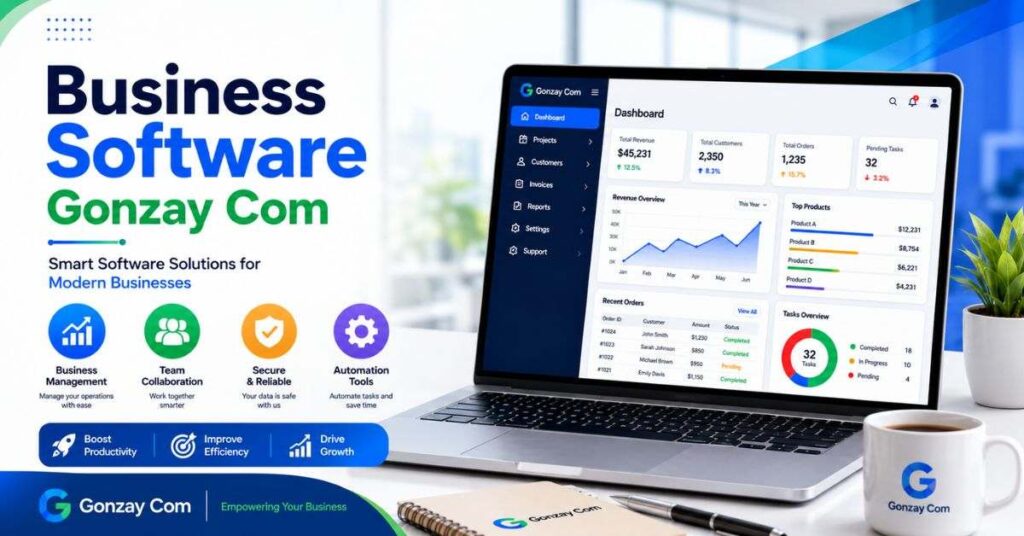
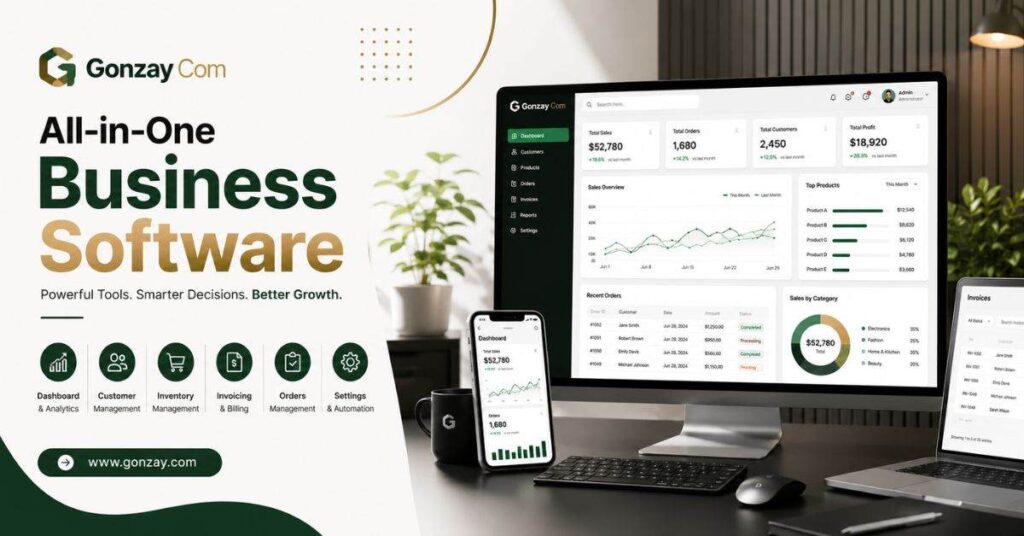
One platform that many people search for when looking for business tools is business software: gonzay.com. As we move through this article, we’ll help you understand the bigger picture of business software and how to make smart decisions for your company, no matter where you look for solutions. By the end of this guide, you’ll feel confident about selecting and using software that truly helps your business grow.
In this guide, we’ll explore everything you need to know about business software in 2026. We will discuss the functions of these tools, their importance, and how to select the best ones for you. You’ll also learn about different types of software, see helpful comparisons, and get answers to common questions.
What Is Business Software and Why Does It Matter?
Business software refers to computer programs and applications designed to help companies complete their work more efficiently. These tools can do many different jobs from tracking your money and managing customer information to organizing projects and communicating with your team.
Think of business software as your digital assistant. Just like a helpful employee, these programs take care of repetitive tasks, remind you of important deadlines, and keep all your information in one safe place. For example, instead of writing down customer names and phone numbers in a notebook, you can use software for managing customer relationships to store everything digitally and find it instantly when needed.
Today’s business software comes in many forms. Some programs you install directly on your computer, while others work entirely online through your web browser (we call these “cloud-based” tools). Most modern businesses prefer cloud-based software because you can access it from anywhere, like your office, home, or even while traveling.
According to research from the U.S. Small Business Administration, companies that use proper business software see up to 30% improvement in productivity within the first year. This happens because these tools reduce errors, save time, and help teams work together better.
Business software is important because it creates equal opportunities for all businesses. Small companies can now use the same powerful tools that big corporations use, often at affordable prices. This means your local coffee shop can have professional accounting software, and your neighborhood salon can send automated appointment reminders just like large chains do.
Types of Business Software You Should Know About
Understanding the different categories of business software helps you pick the right tools for your specific needs. Here are the main types you’ll encounter:
Accounting and financial software helps you track money coming in and going out. Programs like QuickBooks, Xero, and FreshBooks let you create invoices, record expenses, and prepare tax documents. You don’t need to be a math expert; these tools do the calculations for you.
Customer Relationship Management (CRM) software stores information about your customers and helps you build better relationships with them. Popular options include Salesforce, HubSpot, and Zoho CRM. These tools remember customer preferences, purchase history, and communication records.
Project management software keeps your team organized when working on tasks and projects. Tools like Asana, Trello, and show who’s responsible for what, what deadlines are coming up, and how projects are progressing.
Communication and collaboration tools help teams talk to each other and work together smoothly. Slack, Microsoft Teams, and Zoom fall into this category. They support messaging, video calls, and file sharing.
Human Resources (HR) software manages employee information, payroll, time tracking, and benefits. BambooHR, Gusto, and Workday are examples that make HR tasks much simpler.
Marketing automation software sends emails, manages social media posts, and tracks how well your marketing campaigns perform. Mailchimp, Constant Contact, and ActiveCampaign are well-known in this space.
Inventory management software helps businesses that sell physical products track what they have in stock. This prevents running out of popular items or ordering too much of something that doesn’t sell well.
Each type serves a different purpose, but many businesses use several types together to cover all their needs. The key is starting with what you need most and adding more tools as your business grows.
How to Choose the Right Business Software for Your Company
Choosing business software can feel overwhelming with so many options available. Here’s a step-by-step approach to make the decision easier:
Step 1: Identify Your Biggest Challenges.
What takes too much time in your business? What tasks do you or your team dislike doing? Where do mistakes happen most often? Your answers point to where software can help the most.
Step 2: Set a Budget.
Software prices vary widely from free basic versions to expensive enterprise plans. Most business software now uses subscription pricing, meaning you pay monthly or yearly. Be realistic about what you can afford, but remember that good software often pays for itself through time savings and better results.
Step 3: List Must-Have Features.
Not every tool needs every feature. Make a list of what you absolutely need versus what would be nice to have. For example, a freelancer might need simple invoicing but not complex inventory tracking.
Step 4: Check Compatibility.
Will the new software work with tools you already use? Many programs connect with each other through integrations. For instance, your email marketing tool should integrate with your CRM, and your accounting software should work with your bank.
Step 5: Read Real User Reviews.
Look beyond the marketing claims and see what actual users say. Websites like G2, Capterra, and Trustpilot collect honest reviews from real business owners.
Step 6: Try Before You Buy.
Most quality business software offers free trials, typically 7 to 30 days. Use this time to actually test the software with your real work; don’t just click around. See if it truly makes your job easier.
Step 7: Consider Growth.
Choose software that can grow with your business. Will it still work when you have more customers, more employees, or more locations? Switching software later can be costly and disruptive.
Remember, the “best” software is the one that fits YOUR specific situation, not necessarily the one with the most features or the biggest name recognition.
Understanding Cloud-Based vs. On-Premise Software
When exploring business software options, you’ll encounter two main installation types: cloud-based and on-premise. Understanding the difference helps you make better choices.
Cloud-based software (also called SaaS, Software as a Service) runs on the internet. You access it through your web browser, like Google Chrome or Safari. You don’t install anything on your computer except perhaps a small app. Examples include Google Workspace, Salesforce, and Shopify.
The advantages are significant. You can access cloud software from any device with internet, like your laptop, tablet, or smartphone. Updates happen automatically without you doing anything. You don’t need to buy expensive servers or hire IT staff. If your computer breaks, your data stays safe in the cloud. Most cloud software uses subscription pricing, so you pay smaller amounts regularly instead of one huge upfront cost.
The main disadvantage is that you need internet access to use cloud software. If your internet goes down, you can’t work. Also, since your data lives on someone else’s servers, you must trust that company to keep it secure and private.
On-premise software installs directly on your company’s computers or servers. You own the software after purchasing it (though you might pay for updates separately). Microsoft Office (the traditional version you install) and some specialized industry software work this way.
On-premise software doesn’t require internet to function once installed. You have complete control over your data since it lives on your equipment. Some industries with strict privacy rules prefer this control.
However, on-premises software typically costs more upfront. You’re responsible for updates, backups, and security. If a computer crashes, you might lose data if you haven’t backed it up properly. You can usually only access the software from specific computers where it’s installed.
In 2026, most businesses choose cloud-based software because of its flexibility and lower barriers to entry. According to research from Harvard Business School, over 85% of small businesses now primarily use cloud-based tools.
Security and Data Protection in Business Software
When you use business software, you’re trusting it with important information: customer details, financial records, employee data, and business secrets. Security should be a top priority when choosing any software.
Understanding Common Security Features:
Encryption scrambles your data so that even if someone intercepts it, they can’t read it without the proper key. Look for software that uses encryption both when storing data and when transmitting it over the internet.
Two-Factor Authentication (2FA) adds an extra security step beyond just your password. When you log in, the software sends a code to your phone or email that you must enter. This prevents hackers from accessing your account even if they steal your password.
Regular backups mean the software automatically saves copies of your data. If something goes wrong—a technical glitch, accidental deletion, or even a natural disaster—you won’t lose everything.
Access controls let you decide who can see or change what information. For example, you might want salespeople to see customer information but not financial records.
Questions to Ask Before Choosing Software:
Where is my data stored physically? (Some businesses must keep data within certain countries due to laws.)
How often does the company back up my data?
What happens to my data if I stop paying for the subscription?
Has this company ever had a data breach? How did they handle it?
What certifications does the software have? (Look for SOC 2, ISO 27001, or industry-specific certifications.)
According to the Cybersecurity & Infrastructure Security Agency, small businesses should treat data security as seriously as large corporations. One data breach can destroy customer trust and even lead to lawsuits.
Choose software from reputable companies with clear privacy policies. Read the terms of service to understand your rights. And always, always use strong, unique passwords for your business software accounts.
Integration: Making Your Software Work Together
One of the biggest advantages of modern business software is that different programs can “talk” to each other through integrations. This connection means information flows automatically between your tools without you having to copy and paste or enter data twice.
Why Integrations Matter:
Imagine you receive an order through your online store. With proper integrations, here’s what can happen automatically: the order appears in your inventory system (so you know to ship it), your accounting software records the sale (so your finances stay current), your CRM adds the customer’s information (so you can market to them later), and your email tool sends a thank-you message.
Without integrations, you’d have to manually enter that order into four different programs—wasting time and risking mistakes.
Popular Integration Platforms:
Zapier connects over 5,000 different apps and creates automated workflows called “Zaps.” Even without technical skills, you can set up connections like “When someone fills out my contact form, add them to my email list and create a task in my project management tool.”
Make (formerly Integromat) offers similar functionality with more complex options for those who need them.
Native integrations are built directly into software. For example, many email marketing tools have built-in connections to popular CRM systems.
Tips for Successful Integration:
Start simple with one or two connections that save you the most time. Map out on paper what information needs to flow where. Test integrations thoroughly before relying on them for important business processes. Keep a human eye on automated processes initially to catch any errors.
When evaluating business software, always check what integrations it offers. Software that works well with your other tools will be far more valuable than a standalone program, no matter how good that single program is.
Business Software Costs: What to Expect in 2026
Understanding software costs helps you budget appropriately and avoid surprises. Business software pricing has changed dramatically over the past decade, with subscription models now dominating the market.
Common Pricing Models:
Per-user, per-month charges are based on how many people use the software. A CRM might cost $25 per user monthly. If you have 5 salespeople, you’d pay $125 per month. This model scales with your team size.
Flat Rate charges the same price regardless of users, though there might be maximum limits. Some project management tools charge $100 monthly whether you have 3 users or 30.
Tiered pricing offers different packages at different prices. The basic tier might include essential features for $10 monthly, while the professional tier with advanced features costs $50 monthly.
Freemium provides basic functionality free, with paid upgrades for additional features. Many tools use this approach to let you try before committing money.
A one-time purchase is less common now but still exists for some on-premise software. You pay once (often hundreds or thousands of dollars) and own it, though updates might cost extra.
Typical Price Ranges (2026):
- Accounting software: $10-$70 per month
- CRM systems: $15-$100 per user per month
- Project management: $10-$50 per user per month
- Email marketing: $10-$300 per month (often based on subscriber count)
- Video conferencing: $15-$30 per user per month
- All-in-one business suites: $30-$100 per user per month
Hidden Costs to Watch For:
Setup fees for getting started, training costs if your team needs classes, integration fees for connecting with other tools, storage fees if you exceed data limits, and support fees if basic customer service isn’t included.
Smart business owners calculate the total cost of ownership, not just the monthly subscription but all the related expenses. Also consider the value of time saved. If software costs $50 monthly but saves you 5 hours of work, and your time is worth $25 per hour, you’re actually gaining $75 in value.
Real-World Success Stories: Software That Transformed Businesses
Seeing how other businesses use software successfully can inspire ideas for your own company. Here are real examples (names changed for privacy) of businesses that improved through the right tools:
Maria’s Boutique:
Maria ran a small clothing store and struggled to track inventory. She’d often run out of popular sizes or order too many items that didn’t sell. After implementing inventory management software connected to her point-of-sale system, she could see what was selling in real-time. Within six months, her excess inventory dropped by 40%, and she stopped missing sales due to stockouts. The software paid for itself in saved money within two months.
Green Lawn Care Services:
This landscaping company had five crews working across town. The owner spent hours each evening calling crews to find out what jobs they completed and what problems they encountered. After adopting field service management software with mobile apps, crews could update job status in real-time from their phones. The office could see everyone’s location and schedule jobs more efficiently. Customer satisfaction improved because the office could provide accurate arrival times, and the business took on 20% more jobs with the same number of crews.
Downtown Dental Practice:
This dental office used paper appointment books and constantly dealt with no-shows. They adopted practice management software that sent automatic appointment reminders via text and email. No-shows dropped by 60%, which meant less wasted time and more revenue. The software also streamlined billing and insurance claims, reducing the time spent on paperwork by half.
Craftworks Online Store:
This maker of handmade jewelry struggled to keep track of customer interactions across email, social media, and their website. After implementing a CRM system, they could see each customer’s complete history. They discovered that customers who bought earrings often returned within three months to buy matching necklaces. They created a targeted email campaign for earring buyers, which increased repeat purchases by 35%.
These stories show a common theme: the right software solves specific problems and delivers measurable results. The key is identifying your particular pain points and finding tools designed to address them.
Visual Comparison: Key Features of Business Software Categories
Understanding what features belong to each software category helps you know what to look for. Here’s a detailed breakdown:
Table 1: Essential Features by Software Type
| Software Type | Must-Have Features | Nice-to-Have Features | Best For |
|---|---|---|---|
| Accounting | Invoice creation, expense tracking, financial reports, tax preparation | Bank integration, receipt scanning, multi-currency support | All businesses with income/expenses |
| CRM | Contact database, interaction history, task management | Sales pipeline, email integration, mobile app | Businesses with repeat customers |
| Project Management | Task lists, deadlines, team assignments | Time tracking, file storage, Gantt charts | Teams working on multiple projects |
| Email Marketing | Contact lists, email templates, send scheduling | A/B testing, automation workflows, analytics | Businesses building customer relationships |
| HR Software | Employee records, time-off tracking | Payroll processing, benefits management, onboarding | Businesses with 5+ employees |
Table 2: Monthly Cost Comparison by Business Size
| Software Category | Solo/Micro (1-2 people) | Small Business (3-20 people) | Medium Business (21-100 people) |
|---|---|---|---|
| Accounting | $0-$20 | $20-$50 | $50-$150 |
| CRM | $0-$30 | $75-$300 | $300-$2,000 |
| Project Management | $0-$15 | $50-$200 | $200-$1,000 |
| Communication | $0-$15 | $45-$150 | $150-$500 |
| All-in-One Suite | $30-$50 | $150-$600 | $600-$3,000 |
These tables provide quick reference points, but remember that your specific needs might be different. A very small business might need sophisticated CRM if they have complex sales processes, while a larger business might use simple project management if their work is straightforward.
Common Mistakes to Avoid When Choosing Business Software
Learning from others’ mistakes saves time, money, and frustration. Here are the most common errors businesses make when selecting software:
Mistake 1: Choosing Based on Features Rather Than Needs.
The software with the longest feature list isn’t necessarily the best. If you won’t use 80% of the features, you’re paying for unnecessary complexity. Focus on solving your actual problems, not collecting features.
Mistake 2: Skipping the Trial Period.
Almost all quality business software offers free trials. Some business owners just read reviews and buy without testing. Actually use the software with your real work during the trial. You’ll discover whether it fits your workflow.
Mistake 3: Ignoring Your Team’s Input.
The owner might choose software, but employees actually use it daily. If the tool is confusing or makes their jobs harder, they’ll resist using it or use it incorrectly. Involve your team in testing and decision-making.
Mistake 4: Underestimating Training Time.
New software requires learning time. Business owners sometimes expect their team to become experts overnight. Budget time for training and expect productivity to dip slightly at first before improving.
Mistake 5: Not Planning for Data Migration.
Moving information from old systems to new software (called data migration) can be complicated. Some businesses lose important data during switches. Always back up everything first and ask software companies about migration support.
Mistake 6: Forgetting About Mobile Access.
In 2026, business happens everywhere, not just at desks. If your team works in the field, at customer locations, or from home, make sure your software has good mobile apps.
Mistake 7: Choosing Software That Doesn’t Scale.
The cheap basic plan works great when you’re small, but what happens when you grow? Some businesses outgrow their software quickly and must go through the painful process of switching.
Mistake 8: Trusting Only Marketing Materials.
Software companies naturally highlight strengths and downplay weaknesses. Read independent reviews, ask for customer references, and search for “problems with [software name]” to get the full picture.
Avoiding these mistakes increases your chances of finding software that truly helps your business rather than creating new problems.
The Future of Business Software: Trends for 2026 and Beyond
Business software continues evolving rapidly. Understanding upcoming trends helps you make future-proof choices and prepare for what’s coming.
Artificial Intelligence (AI) Integration:
AI is becoming standard in business software, not just a fancy extra. In 2026, you’ll find AI features that write email responses, predict which customers might stop buying from you, automatically categorize expenses, schedule meetings by understanding everyone’s preferences, and answer common customer questions.
These AI features save enormous time on repetitive thinking tasks. The software learns from your patterns and makes increasingly helpful suggestions.
No-Code and Low-Code Tools:
More business software allows customization without programming skills. Using visual drag-and-drop interfaces, business owners can create custom workflows, design data collection forms, and build simple apps.
This trend means you don’t need to hire expensive developers for every business tool you want. Small businesses can customize software to their unique processes.
Industry-Specific Solutions:
General-purpose software works for many businesses, but increasingly, developers create tools for specific industries. There’s now software designed specifically for physical therapists, auto repair shops, wedding planners, and nearly every other profession.
Industry-specific software includes features and terminology that match your work exactly, reducing the need to adapt generic tools.
Enhanced Mobile Experiences:
Business software mobile apps are becoming just as powerful as desktop versions. In many cases, the mobile experience is actually better because it’s designed for work happening outside the office.
Improved Integration and Automation:
Software connections continue getting smarter and easier. In 2026, many tools can automatically suggest useful integrations based on what other similar businesses use. Setting up automation requires fewer technical skills than before.
Focus on Employee Experience:
Software companies now recognize that if employees dislike using their tools, businesses won’t buy them. Newer software emphasizes being intuitive, attractive, and even enjoyable to use.
According to MIT Technology Review, the business software industry will grow by approximately 12% annually through 2028, driven by these innovations making tools more accessible and valuable for all business sizes.
Frequently Asked Questions About Business Software
Q1: How do I know if I really need business software or if I can continue using spreadsheets and paper?
If you spend more than 5 hours weekly on tasks that software could automate, make frequent errors in manual processes, or struggle to find information quickly, you’ll likely benefit from business software.
Q2: What happens to my data if the software company goes out of business?
Reputable companies provide data export features and have contingency plans. Before choosing software, ask about data portability and check if you can export information in standard formats like CSV or PDF.
Q3: Can I use different software from different companies, or should everything be from one provider?
Both approaches work. All-in-one suites from one provider offer easier integration but might not excel at everything. Best-of-breed tools (choosing the best option for each category) offer superior features but require managing multiple subscriptions and integrations.
Q4: How long does it typically take to implement new business software?
Simple tools like email marketing can be ready in hours. Complex systems like enterprise accounting might take weeks or months. Most small business software reaches full implementation within 2-4 weeks.
Q5: Is free business software worth using, or should I always pay for premium versions?
Many free versions work excellently for small businesses and solo entrepreneurs. As you grow or need advanced features, paid versions become worthwhile. Start free when possible and upgrade when you hit limitations.
Conclusion: Taking the Next Step with Business Software
Business software has become essential for companies of all sizes in 2026. The right tools help you work smarter, serve customers better, and grow more sustainably. Whether you’re just starting your business journey or looking to upgrade your current systems, the information in this guide provides a solid foundation for making informed decisions.
Remember that choosing business software isn’t about finding the most expensive option or the one with the most features. It’s about identifying your specific needs, testing solutions thoroughly, and implementing tools that genuinely make your work life easier. Start with your biggest pain point the task that wastes the most time or causes the most frustration and find software to solve that specific problem.
As you’ve learned, platforms vary widely in features, pricing, and specialization. Some businesses search for solutions on bussiness software gonzay com and similar resources, while others explore mainstream software marketplaces. Whichever path you take, prioritize security, scalability, and user-friendliness. Involve your team in decisions, take advantage of free trials, and don’t rush the process.