
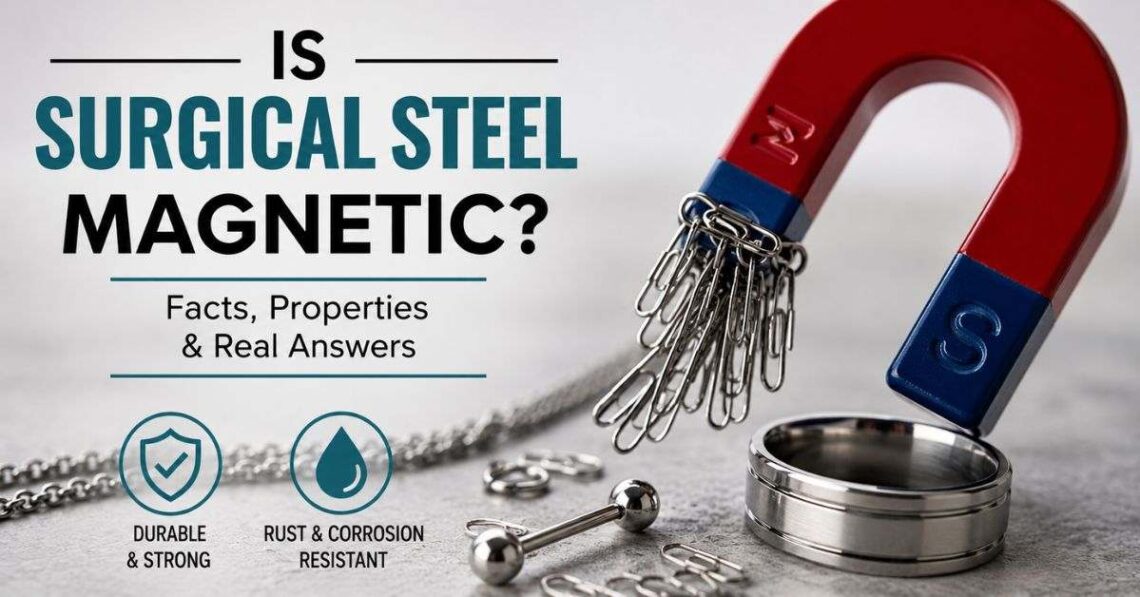
Surgical steel is widely used in hospitals, body jewelry, implants, and medical tools. It is known for being strong, rust-resistant, and safe for the human body. But many people still ask one simple question: is surgical steel magnetic? This question is important for patients with implants, people who need MRI scans, and even those who wear body piercings.
Understanding how this metal reacts to magnets helps you stay safe and make smart health decisions. Some types of surgical steel are magnetic, while others are not. The answer depends on the exact grade and structure of the metal. In this guide, we will explain everything in clear and simple words. You will learn how magnetism works, which types of surgical steel attract magnets, how this affects medical procedures, and what it means for your health.
“Amazing Truth About Is Surgical Steel Magnetic 2026” is a helpful topic for anyone curious about metal properties and jewelry materials. Many people assume all surgical steel reacts the same way to magnets, but the reality depends on the specific alloy and manufacturing process. Understanding whether surgical steel is magnetic can help buyers choose better jewelry, medical tools, and stainless steel products with confidence.
What Is Surgical Steel?
Surgical steel is a special type of stainless steel made for medical use. It is designed to be strong, resist rust, and stay safe inside or outside the body. Doctors use it for tools, implants, plates, screws, and even surgical scissors.
The most common types are 316L and 304 stainless steel. The “L” in 316L means “low carbon,” which helps reduce rust and corrosion. Because of this, 316L is often used in implants and body jewelry.
Surgical steel contains iron, chromium, nickel, and sometimes molybdenum. Chromium helps prevent rust. Nickel adds strength and shine. Molybdenum increases resistance to chemicals and body fluids.
The Centers for Disease Control and Prevention (CDC) stresses the importance of corrosion-resistant materials in healthcare settings to prevent infection and contamination.
Key features of surgical steel:
- Resistant to rust and corrosion
- Strong and durable
- Easy to clean and sterilize
- Safe for many medical uses
- Affordable compared to titanium
However, not all surgical steel behaves the same way around magnets. The internal structure of the metal decides whether it will attract a magnet or not.
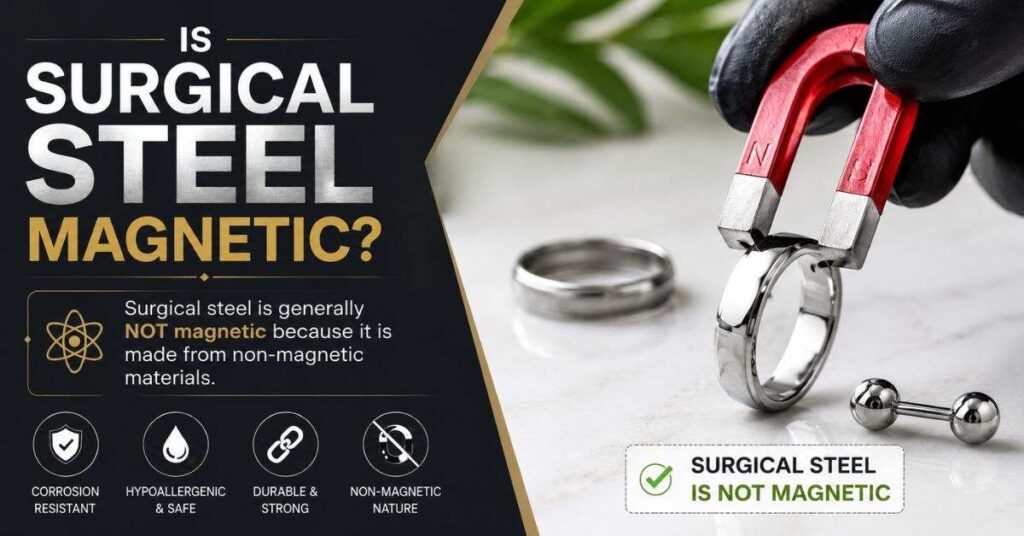
The Short Answer: Is Surgical Steel Magnetic?
Many readers want a quick response, so here it is:
Some types of surgical steel are magnetic, and some are not.
The confusion comes from the different grades used in medical products. When people ask, is surgical steel magnetic, the true answer depends on its internal crystal structure.
There are two main structures.
- Austenitic stainless steel – Usually not magnetic
- Martensitic stainless steel – Magnetic
The most common medical grade, 316L, is generally non-magnetic in its normal state. However, after heavy machining or cold working, it may show slight magnetism.
So if you test your surgical jewelry with a magnet and feel a tiny pull, that does not always mean it is fake or unsafe. It may simply be due to changes during manufacturing.
For MRI safety and implants, doctors check the exact grade before use. This ensures patient safety and avoids risks.
Why Do Some Types Attract Magnets?
To understand magnetism, we need to look at atoms. Metals contain tiny particles called electrons. When these electrons line up in a certain way, the metal becomes magnetic.
Steel is made mainly from iron, which is magnetic. But when other elements like chromium and nickel are added, they change the internal arrangement of atoms.
Austenitic stainless steel (like 316L)
- Has a face-centered cubic structure
- Electrons are arranged so magnetism is weak or absent.
- Usually non-magnetic
Martensitic stainless steel:
- Has a body-centered structure
- Electrons align more easily
- Magnetic
This is why the question of whether surgical steel is magnetic cannot have a simple yes-or-no answer. It depends on the atomic structure created during manufacturing.
Heat treatment, welding, and cold working can also slightly change magnetic properties. That’s why some medical tools feel magnetic while implants often do not.
Common Grades Used in Healthcare
Different grades serve different purposes. Below is a simple table to help you understand.
Table 1: Common Surgical Steel Grades and Magnetism
| Grade | Structure Type | Magnetic? | Common Uses |
|---|---|---|---|
| 316L | Austenitic | Usually No | Implants, body jewelry |
| 304 | Austenitic | Slightly after cold work | Surgical trays |
| 410 | Martensitic | Yes | Surgical instruments |
| 420 | Martensitic | Yes | Scalpels, scissors |
316L is the gold standard for implants because it resists corrosion from body fluids.
If you are wondering again, is surgical steel magnetic, check the grade number first. That tells you more than a magnet test alone.
Surgical Steel and MRI Safety
MRI machines use strong magnetic fields. Because of this, patients often worry about implants and piercings.
So, is surgical steel magnetic in a way that makes MRI dangerous?
In most cases:
- 316L implants are considered MRI-safe or MRI-conditional.
- They do not move or heat up significantly.
- Doctors still check before scanning.
According to the U.S. Food and Drug Administration, patients should always inform healthcare providers about any metal implants before imaging tests.
If you wear body jewelry, you may be asked to remove it before an MRI. This is mainly for image clarity, not because it will fly out of your body.
Always follow your doctor’s advice. Never assume safety without medical confirmation.
Surgical Implants and Long-Term Safety
Surgical steel has been used in implants for decades. These include:
- Bone plates
- Screws
- Joint supports
- Dental devices
One concern people have is corrosion inside the body. High-quality 316L steel forms a protective layer that reduces rust.
If you’re asking again if surgical steel is magnetic, remember that implants are usually made from non-magnetic grades. Surgeons choose materials carefully to avoid complications.
However, in recent years, titanium has become more popular because it is lighter and completely non-magnetic. Still, surgical steel remains widely used due to its strength and cost-effectiveness.
Body Jewelry: Should You Worry About Magnets?
Many people test their earrings or piercings with a magnet. If it sticks, they worry.
But here’s the truth: slight magnetism does not always mean poor quality.
Cold working during shaping can change the internal structure slightly. So when people ask, is surgical steel magnetic, the answer for jewelry is: sometimes slightly.
What matters more is the following:
- Proper certification
- Nickel release levels
- Skin reaction
If you have sensitive skin, look for implant-grade 316L or titanium. Always buy from trusted sellers.
For more tips on safe body materials, see our guide on safe piercing metals (internal link) and how to prevent skin infections (internal link).
How to Test Magnetism at Home
If you’re curious, here’s a simple way to test it.
- Use a strong household magnet.
- Hold it near the metal item.
- Observe any pulling force.
Results
- No attraction → Likely austenitic (316L).
- Strong pull → Likely martensitic (410/420).
- Weak pull → Possibly cold-worked 304 or 316L.
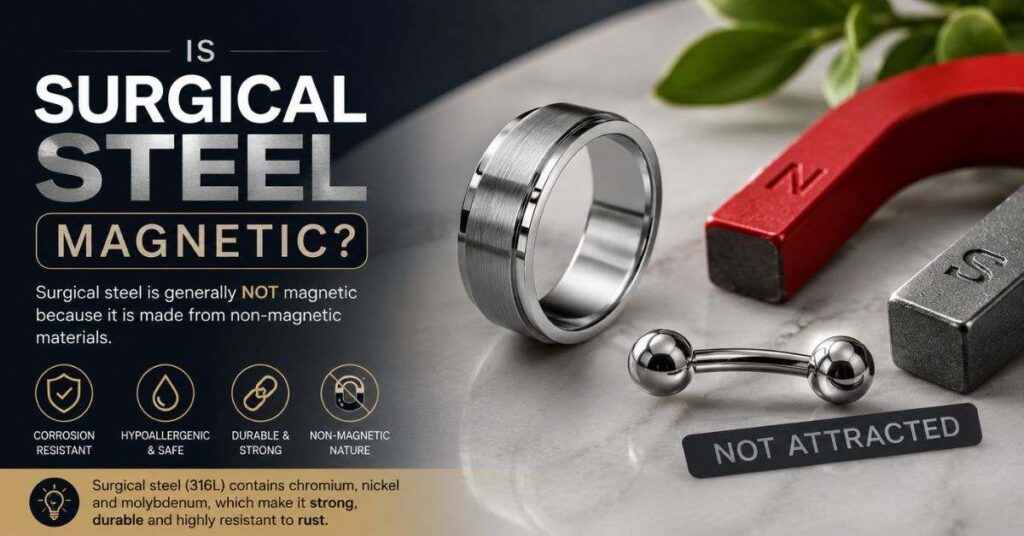
Table 2: What Your Magnet Test Means
| Magnet Reaction | Possible Grade | Medical Safety |
|---|---|---|
| No pull | 316L | Commonly safe for implants |
| Weak pull | Cold-worked 316L | Usually safe |
| Strong pull | 410/420 | Used for tools, not implants |
Keep in mind, magnet testing is not a perfect method. Only lab analysis can confirm exact composition.
Surgical Tools vs. Implants: Why the Difference?
Surgical instruments often need to be very hard and sharp. That’s why martensitic grades (which are magnetic) are used for the following:
- Scalpels
- Forceps
- Scissors
These tools are not implanted in the body long-term.
Implants, however, require corrosion resistance and body compatibility. That’s why non-magnetic grades are preferred.
So when hospitals order materials, they carefully choose the correct type for each purpose. The question is, does surgical steel magnetic matter more for imaging and implant safety than for surgical tools?
Myths and Misunderstandings
Let’s clear up common myths:
Myth 1: Magnetic steel is fake.
Truth: Some real surgical tools are magnetic.
Myth 2: Magnetic jewelry is unsafe.
Truth: Slight magnetism does not mean it’s harmful.
Myth 3: All implants are non-magnetic.
Truth: Most are, but doctors still verify before MRI scans.
When people repeatedly ask if surgical steel is magnetic, it often comes from fear about MRI machines or body piercings. The key is knowing the grade and purpose of the metal.
FAQs
1. Will my surgical steel implant set off airport metal detectors?
Possibly yes, but this is due to electrical conductivity, not magnetism. Carry medical documentation to explain the situation to security personnel without problems.
2. Can I safely get an MRI if I have surgical steel implants?
Most modern surgical steel implants are MRI-safe under specific conditions, but always inform your medical team beforehand so they can verify compatibility with manufacturer specifications.
3. How can I tell if my jewelry is real surgical steel or cheaper metal?
Genuine surgical steel should be marked 316L or 316LVM, resist corrosion, and show minimal magnetic response; purchase only from reputable sellers who provide material certifications.
4. Does surgical steel lose its properties over time in the body?
High-quality surgical steel maintains its properties for decades inside the body when properly manufactured, though some surface changes may occur as tissue integrates around implants.
5. Is titanium better than surgical steel for piercings?
Titanium is completely non-magnetic and slightly less likely to cause reactions, but high-quality surgical steel is also excellent and more affordable; both are safe choices from reputable sources.
Conclusion: What You Should Remember
So, is surgical steel magnetic? The clear answer is “sometimes.” It depends on the type and structure of the steel. Austenitic grades like 316L are usually non-magnetic and widely used for implants and body jewelry. Martensitic grades are magnetic and mostly used for surgical tools.
Magnetism alone does not determine safety. What matters more is the grade, manufacturing process, and medical approval. If you have an implant or upcoming MRI, always talk to your healthcarere provider first.